Land Preparation
When establishing a vineyard, proper site preparation is fundamental.
Site preparation includes several operations, namely: slope terracing, soil tillage, fertilization and soil amendments, and vineyard staking.
Sites with slopes of less than 8% neither present erosion risks nor limit mechanization; therefore, vineyard establishment can be carried out without altering the original soil profile.
Sites with slopes between 8% and 20% may be terraced depending on erosion risk and mechanization constraints, either using wide terraces (patamares) that reduce the original slope, or establishing the vineyard along the line of greatest slope (vinha ao alto).
Sites with slopes greater than 20% should only be developed as narrow terraces (2.5–5 meters wide).

This tillage should consist of deep plowing to a depth of 1 meter where the soil is homogeneous, or cross-ripping where the soil profile is irregular and stony.Deep plowing may be carried out using a heavy-duty plow or the front blade of a bulldozer.
Normally, this tillage incorporates organic amendments (manure), soil acidity amendments (lime), and fertilizers. After deep plowing, the soil should be levelled using a harrow.

Since the vine is a perennial crop, it is essential to build up an adequate reserve of nutrients at depth before planting. The quantity of nutrients to be applied depends on soil fertility, assessed through analysis of soil samples collected at two depths (0–20 cm and 20–50 cm).
Based on the results, a recommendation will be made for base fertilization. Special attention should be given to the values from the second analyzed layer, as this is the zone of root development.
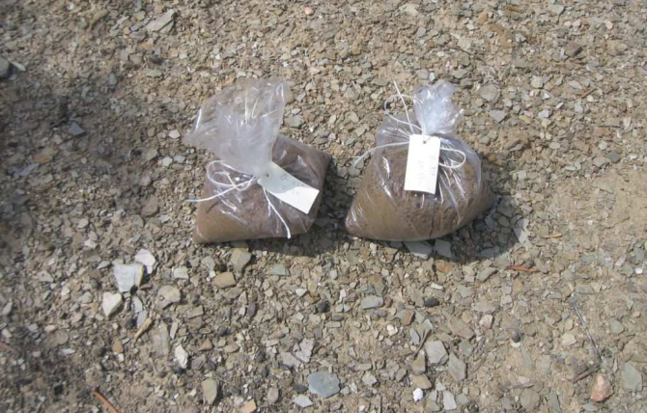
Organic soil amendment
As soils suitable for vine cultivation are not naturally rich in organic matter, it is necessary to incorporate manure or other alternative organic compounds (guano, or chicken manure).
On average, the application of 20 to 30 t/ha of manure is recommended, or 6 to 9 t/ha when using organic compounds.
Soil pH correction
The soils in the region are naturally acidic, making it necessary to correct soil pH through the application of magnesian limestone. The quantity to be applied depends on the results of soil analysis and is influenced by the level of organic matter. However, on average, an application of 3 to 5 t/ha is recommended.
Phosphorus and potassium fertilization
Among the main nutrients required for vine cultivation, phosphorus and potassium are particularly important. As both are poorly mobile in the soil, especially phosphorus, they should be incorporated at depth and in sufficient quantities to ensure an adequate reserve. Thus, on average, the application of 300 units of P₂O₅/ha and 400 units of K₂O/ha is recommended. These nutrients may be supplied as straight fertilizers, such as 18% calcium superphosphate and potassium sulfate or potassium chloride at 60%, or as compound fertilizers, such as Foskapa.
Whenever they cannot be incorporated during deep plowing, these amendments and fertilizers should be applied using a tractor-mounted plow at a depth of 40 cm before planting (in the case of small plots) and whenever only subsoiling is carried out.
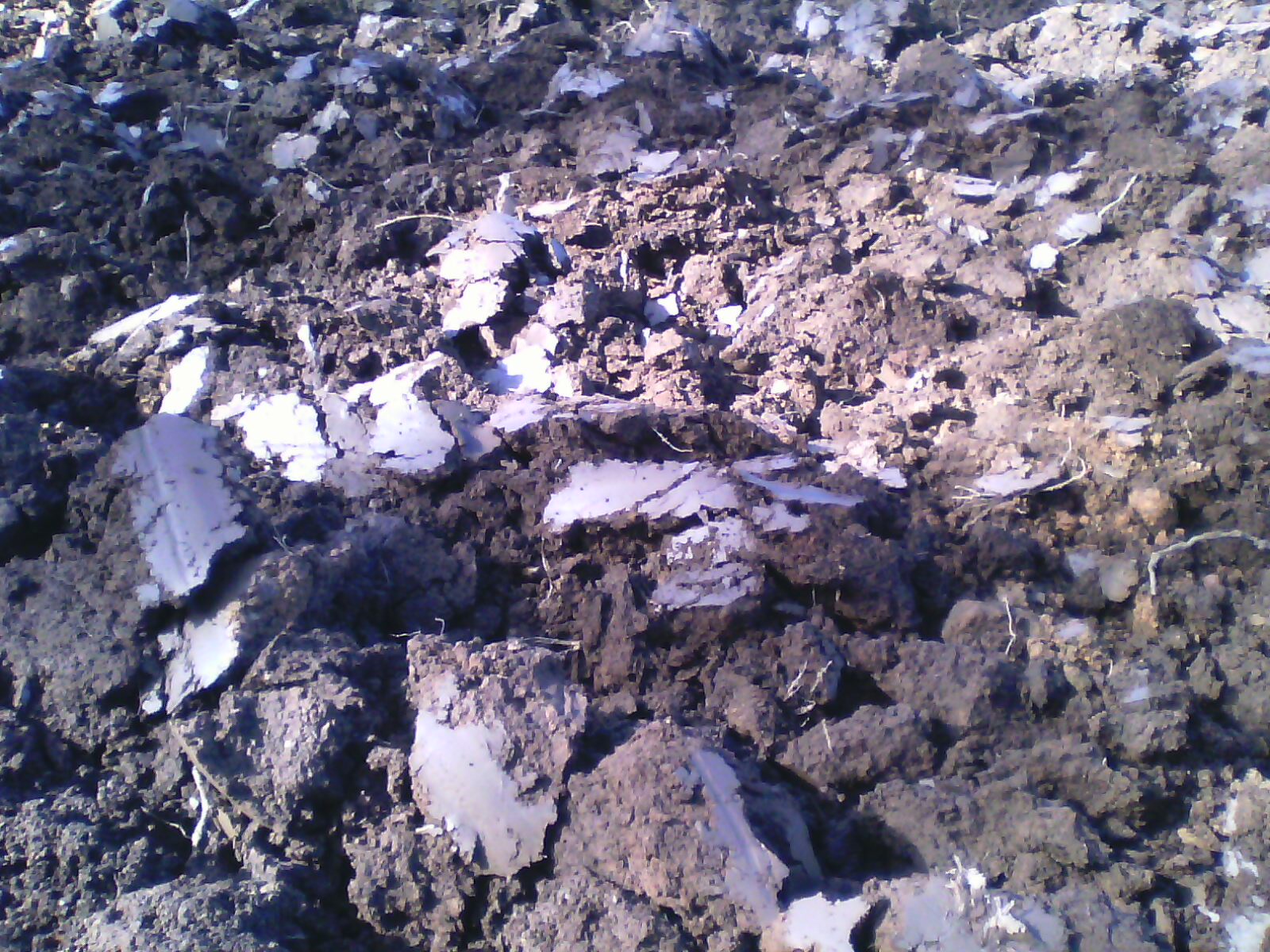
Vineyard layout is carried out according to planting spacing and parcel configuration, which determine row orientation. Planting spacing depends on the training system to be installed, soil fertility, and grape variety.
Regarding row orientation, rows should be aligned north–south whenever the parcel configuration allows, as this provides the best use of solar radiation under local conditions. When north–south orientation is not possible, rows should follow the longest axis of the parcel to optimize mechanization.
Layout must be carried out with high precision, ensuring perfectly aligned rows, which is essential for vineyard mechanization. For marking the main rows, it is necessary to lay out the grid. This is achieved by marking a right triangle at the corners of the parcel, with sides of 3.0 m and 4.0 m and a diagonal of 5.0 m, using a measuring tape or, preferably, laser marking equipment. It is also necessary to leave headlands of sufficient width to allow machinery to turn; these should never be less than 5.0 m wide.