Planting
When establishing a vineyard, several aspects must be considered: type of planting material; the appropriate season for planting; and material preparation.
Vineyards are normally planted during the dormant period, from January to March. Earlier planting is suggested in warmer, drier sites, while cooler, wetter sites come later. Bench-grafted vines should be planted as early as possible. Nowadays, vineyard planting extends beyond this period since bench-grafted vines can be planted in containers in late spring and early summer. This requires water, making it useful to have a drip irrigation system.
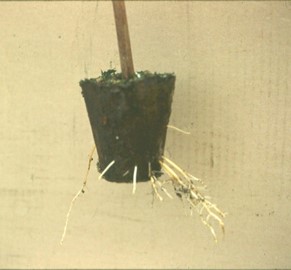
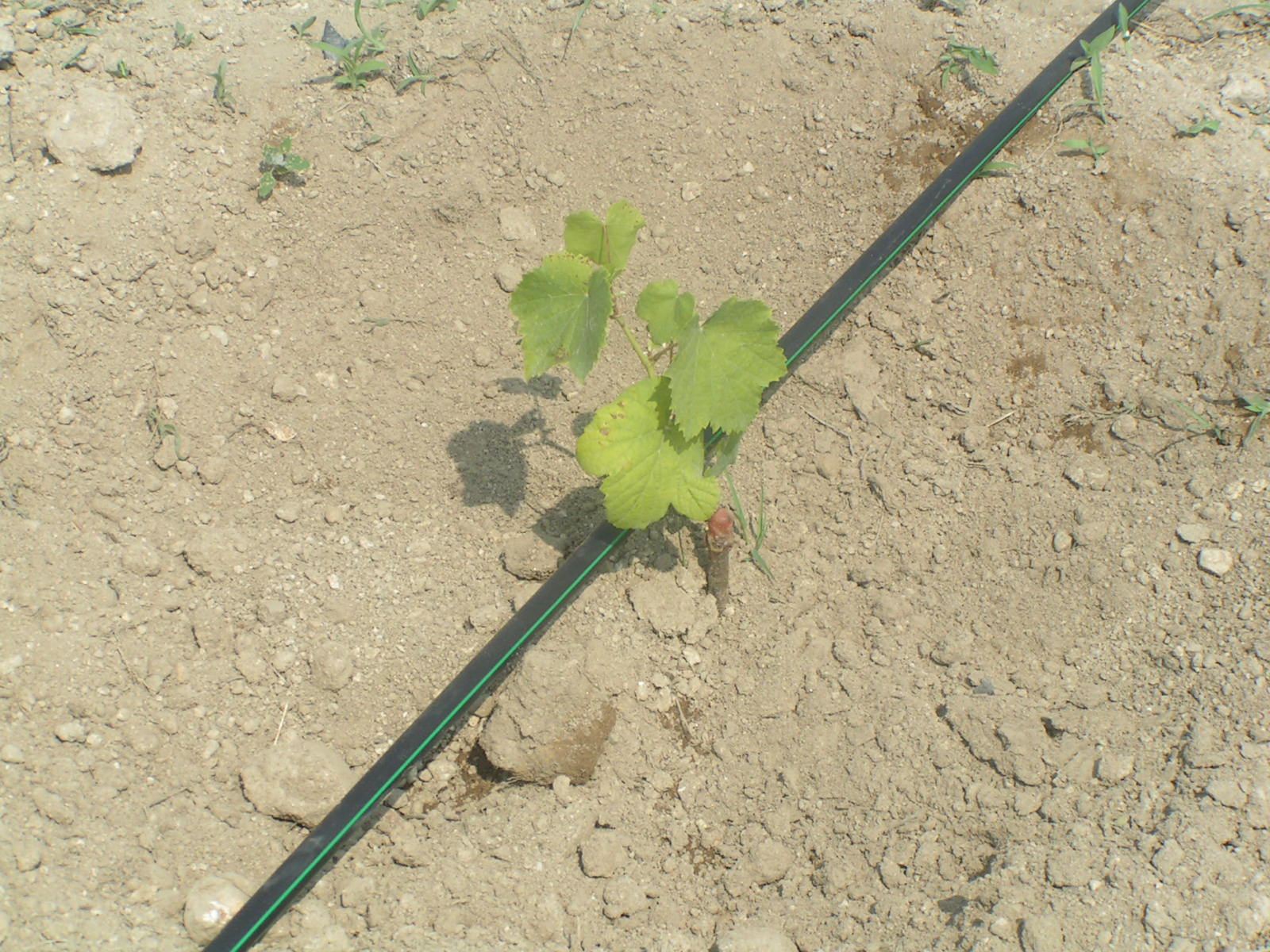
Both rootstocks or bench-grafted vines may be used. The traditional practice of planting rootstocks involves field grafting by professional grafters. More recently, due to the shortage of this specialized labor, the traditional practice has increasingly been replaced by a technique for producing bench-grafted vines developed at EVAG. Although more expensive, this type of planting material offers several important advantages, including: resolving the current shortage of grafters; facilitating the establishment of vineyards with guaranteed varietal identity; achieving greater vineyard uniformity by eliminating failures at the permanent planting site, both in rootstock planting and grafting; bringing the vineyard into production earlier; making it possible to fill gaps in the same year using container-grown bench-grafted vines (June).
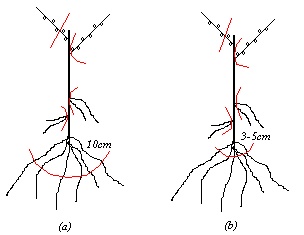
Before planting, the vines must be prepared by carrying out what is known as bare-root pruning. This consists of selecting the best-positioned and most vigorous shoot of the current season and removing the others. The selected shoot is then pruned to two buds. The roots are also pruned, retaining only those that developed from the lower node. These are pruned to 10 cm when using pit planting (a), or shorter, 3–5 cm, when planting with a hydro-injector (b).
Rootstocks and bench-grafted vines can be planted using three main methods:
Trench Planting
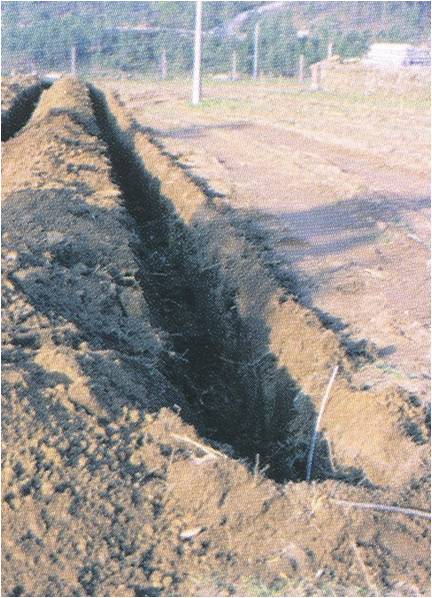
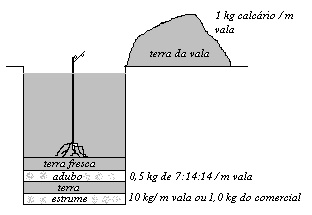
This method involves opening large pits or trenches (80 cm deep × 60 cm wide) and is used mainly when subsoiling or ripping is not possible—whether because of plot size or when planting along the field margin. With this type of planting, manure and fertilizer are applied locally. As a result, the vines show good initial development, but the method does not allow the roots to colonize the entire plot effectively.
Hydro-Injector Planting
This method involves planting with a small device connected to a tractor-mounted sprayer that uses a jet of pressurized water to open a small hole for planting the vine. It is quicker, and the planting material is already watered as part of the planting operation, which helps settle the soil around the roots—but the ground must be previously well worked at depth, manured, and fertilized. It cannot be used on excessively stony soils. With this method, the vine roots must be pruned to 3–5 cm. After the vine is placed in the hole, it should be pulled up slightly so that the roots do not remain bent and instead take up their normal position.
Pit or Hole Planting
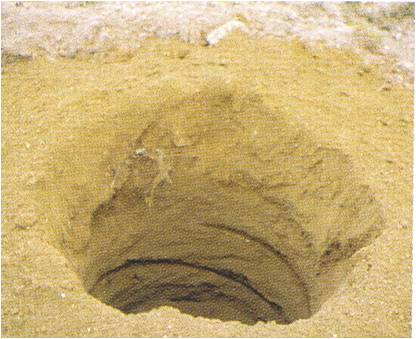
This planting type consists of opening a hole (manually or with an auger) 60 cm deep, where the vine will be placed. Given the size of the pit, longer roots—with more reserves—can be left in place, which is an advantage for late planting. It also allows for localized fertilization at planting. Its drawback is that it makes the planting operation more time-consuming, and, if the soil has some clay content, it can cause the pit walls to become glazed, preventing the roots from expanding.
Regardless of the planting method adopted, certain precautions should be taken during planting:
- The roots, when properly positioned, should never come into direct contact with fertilizer, and should be firmly bedded, with the soil being trodden down and the vines irrigated immediately.
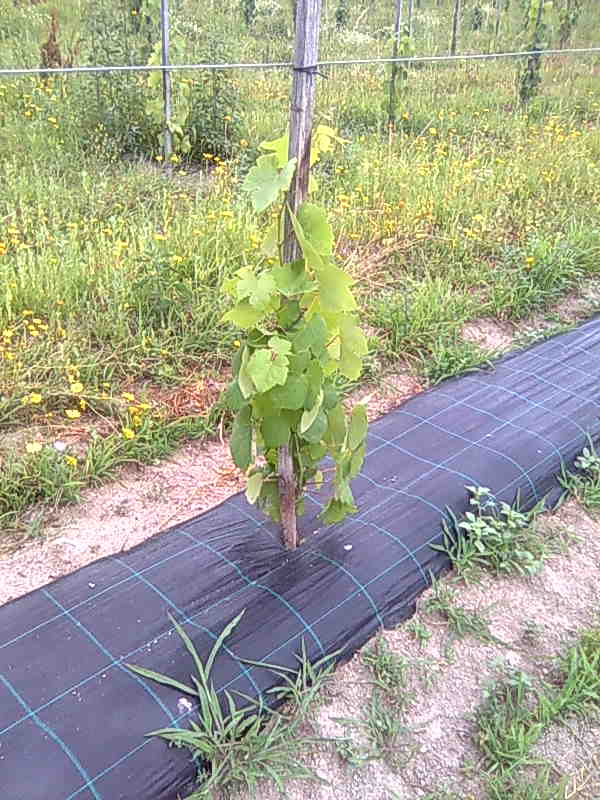
- The rootstocks (or bench-grafted vines) should be planted with the grafting zone (or existing graft union) above soil level to prevent scion rooting. Since a basin is normally formed around each vine for irrigation and/or topdressing fertilization, the correct soil level must be taken into account.
- The vines must be staked to keep the grafting zone (whether newly grafted or already established) upright and also to protect against potential damage (from machinery, irrigation tubing, trampling, etc.).
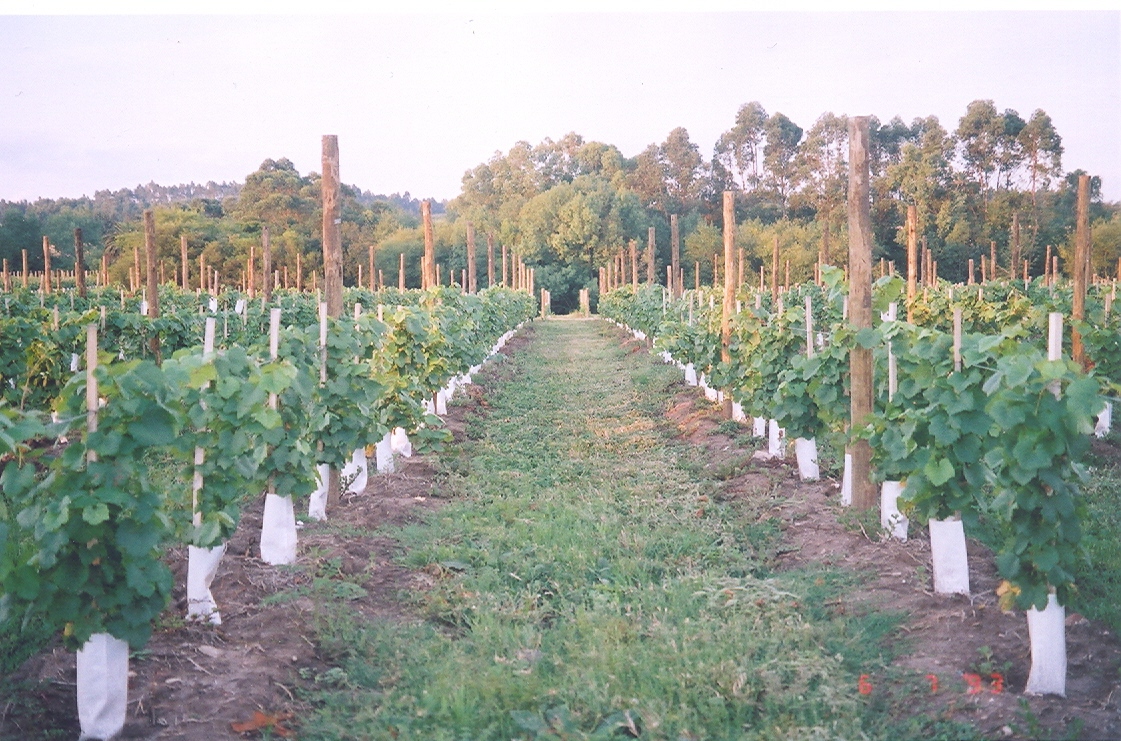
- More recently, vine shelters have been developed that protect the vines from rabbits, serve as supports, reduce the risk of fungal disease, and promote vine growth. The only drawback is that they are still overly expensive, although they can be reused in subsequent years.
- Planting bench-grafted vines requires plant protection treatments against downy mildew and powdery mildew to be carried out in the same year, as the vines are susceptible to these diseases.
- Following budburst, a period of vigorous growth occurs, making a split nitrogen application over the course of the growing season necessary. Two to three topdressing fertilizer applications are recommended, using calcium nitrate at 15.5% or nitromagnesium at 20.5%, at individual rates of approximately 75 g/vine. The fertilizer should be applied locally in the basin and followed by irrigation.